Rust, what a streamer server looks like when Stimpee joins
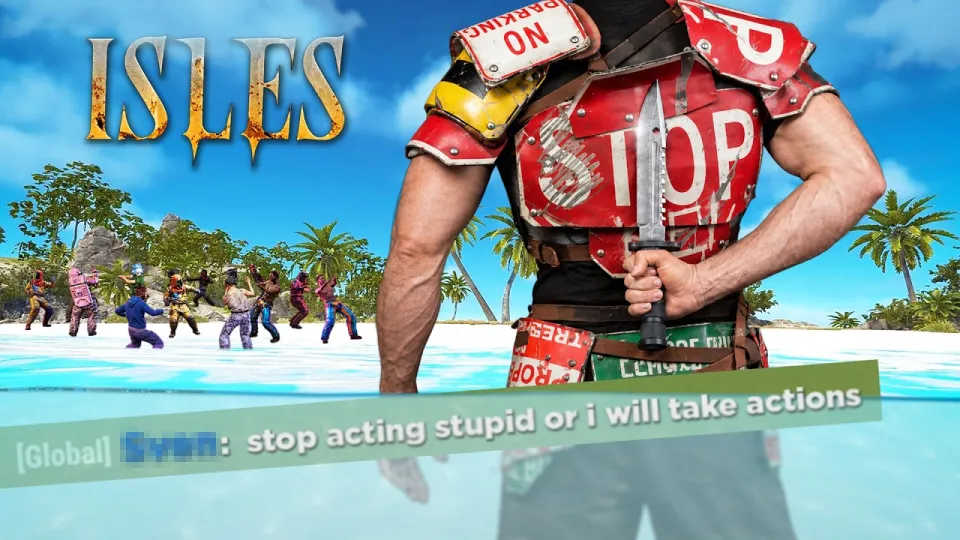
Video: Not Another Rust Streamer Server
Want articles like this for your own video to promote it on YouTube and Google? Order them through the Telegram bot @sat_sit_bot. The bot writes and publishes the articles itself (with your YouTube video embedded) on popular topical websites (no ads). Your first 50 articles are free.
· based on the channel Stimpee
Rust is a hardcore multiplayer survival game where players farm resources, build bases and raid each other on servers that wipe regularly — but a "Rust streamer server" is a different beast: an invite-only world where content creators play together under admin supervision and light roleplay rules. Stimpee's video «Not Another Rust Streamer Server» documents his return to that format on the private Rust Isles server after years away, and you can follow his live sessions on his Twitch channel.
What a Rust streamer server actually is
A Rust streamer server is a private, whitelisted Rust world populated by content creators instead of the general public, usually funded and moderated by an organizer or a sponsor. Access comes by invitation, not by paying for a slot, and the population is small enough that everyone recognizes everyone — which changes the game more than any plugin does.
Key differences from a normal Rust server:
- Whitelist instead of open join. Only approved streamers and their crews get in, so the random solo with a stone hatchet is replaced by a known name with an audience.
- Admin oversight. Moderators watch inventories, intervene in disputes and can strip items — a level of supervision that does not exist on official servers.
- Roleplay framing. Servers like Rust Isles lean into themes (pirates, factions, clans) and expect players to stay in character during negotiations and betrayals.
- Content-first pacing. Wipes, events and rivalries are timed so that streams have something to show, not so that the survival curve is fair.
- Politics over skill. Reputation, alliances and chat drama matter as much as aim, because you cannot simply move to another server when things go wrong.
That combination is why viewers describe these worlds as a playground or a party rather than a survival game — the stakes are social, not material.
Stimpee's return and the clan that recruited him
Stimpee joined Rust Isles as a recruit rather than a faction leader, and the video's central storyline is what happens when a clan hands a boat and a role to a player famous for trolling. The crew that invited him expected loyalty; he treated the arrangement as an opportunity, took the boat and left his new teammates stranded on an island.
What makes the sequence notable is not the theft itself — stealing boats is ordinary Rust behaviour — but the reaction. Instead of turning the betrayal into a revenge arc, the clan leadership treated it as a rule violation and complained in chat, which is exactly the tension streamer servers create: the game mechanics say "steal everything," the server culture says "play nice for the camera." Stimpee's own framing of the moment, telling a clanmate he simply did not want them to have a bad experience, is the kind of deadpan line that turns a small heist into the video's signature scene.
Why admins keep searching Stimpee's inventory
On a streamer server, the biggest threat to the schedule is a single player who is too good at Rust, and admins respond by nerfing that player directly. Viewers of the video repeatedly point out that moderators seem to materialize whenever Stimpee is near a gathering and that his inventory gets checked for weapons of mass destruction — a running joke that also describes real server policy.
Typical admin interventions on creator servers include:
- removing explosives, rockets or C4 from a player who is snowballing too fast;
- limiting group sizes so one clan cannot dominate the map;
- resetting or protecting key structures so an event can still happen;
- muting or teleporting players who break the roleplay framing.
For a solo-minded player this feels like being punished for competence. For the organizer it is scheduling: a wiped clan base on day two means three streams with nothing to film. Both readings are correct, which is why the same clip reads as comedy to one viewer and as censorship to another.
The audience split: roleplay lobby or ruined Rust
Reaction to the video splits cleanly between people who enjoy the social chaos and players who think the format has nothing to do with Rust. One camp sees adults performing pirate politics and finds it unwatchable; the other sees a rare chance to watch well-known creators interact in a shared world without the usual hacker and zerg problems.
Both positions have a factual basis. Streamer servers remove the parts of Rust that frustrate most solo players — cheaters, offline raids at 4 a.m., clans with twenty members — and replace them with the parts that make good television: negotiation, betrayal, improvised alliances. What they lose is the tension of a real wipe, where a lost kit costs hours of farming and nobody is watching.
A useful way to judge the format is to ask what you want from Rust. If you play for the survival loop — farming stone and wood, upgrading to metal, defending a base overnight — a streamer server tells you nothing about your experience. If you watch for player interaction, it is the densest Rust content available, because every encounter is between people who know they are being filmed.
Common questions about streamer servers, answered
Viewers new to the format usually arrive with the same doubts, and most of them come down to fairness and access.
- Can anyone join? Generally no. Slots go to invited creators and their crews; some servers run public events or application forms, but the main world stays closed.
- Is it rigged? Not in the sense of scripted outcomes, but it is curated: admins balance groups, remove snowballing gear and intervene in disputes, so results are managed more than on an official server.
- Why do players complain about theft on a pirate-themed server? Because the theme is decoration and the rules are social. Taking a clan boat is legal in Rust and disruptive to a planned stream, and the conflict is about which expectation wins.
- Do these servers reflect the real game? Only partly. Combat, building and raiding mechanics are the same, but population size, moderation and wipe timing make the experience far gentler than a busy official server.
Useful links
- Twitch, live streams and the source of the server stories: https://www.twitch.tv/st1mpee
- Twitter updates: https://twitter.com/StimpeeYT
- Instagram: https://www.instagram.com/st1mpee/
- Discord community: https://discordapp.com/invite/jMSRYnr
Bottom line
Stimpee's Rust Isles video is a clear look at what a streamer server does to Rust: it turns a survival game into a social one, where a stolen boat matters more than a stolen kit and admins balance the map like producers balancing a show. The format is not a fair test of the game and does not pretend to be — it is entertainment built on the same mechanics, with the sharp edges filed down. If that mix appeals, the full session and the follow-up streams are on Stimpee's Twitch, and the channel Stimpee remains the best place to see the experiment continue.
Key takeaways
- Rust Isles is a private, invite-only Rust server built around streamers and roleplay rather than open survival.
- Stimpee returned to a streamer server after years away and was invited as a clan crew member, then hijacked the clan boat and left the crew stranded.
- Admins on such servers routinely check inventories and remove weapons to keep content creators from wiping each other too early.
- Streamer servers trade Rust's usual wipe-and-raid chaos for scripted events, politics and chat moderation, which divides viewers.
- Rust itself stays a full-loot survival game: solo players still farm stone, wood and metal and get offline-raided on official and community servers.
Questions & answers
What is a Rust streamer server?
It is a private, whitelisted Rust server where access is limited to invited content creators and their crews. Admins moderate inventories, group sizes and disputes so that streams keep producing content, and many such servers add a roleplay or faction theme on top of normal survival mechanics.
Can regular players join Rust Isles or similar servers?
Usually not directly. Slots are invitation-based and tied to creators who bring an audience, though some servers run public events or application forms for special occasions. Your realistic options are official servers, community servers with similar rules, or watching the streams.
Why did the clan get angry when Stimpee took their boat?
Stealing a boat is ordinary Rust behaviour, but on a roleplay-oriented streamer server it broke an unwritten social contract. The crew had recruited him expecting loyalty for their own content, and the conflict came from game mechanics and server culture pointing in opposite directions.
Do admins on streamer servers unfairly target strong players?
They do intervene when one player snowballs, often by checking inventories and removing explosives. It looks like targeting, but the goal is pacing: a wiped clan base early in a wipe leaves the server with nothing to film, so balance is managed rather than left to the game.